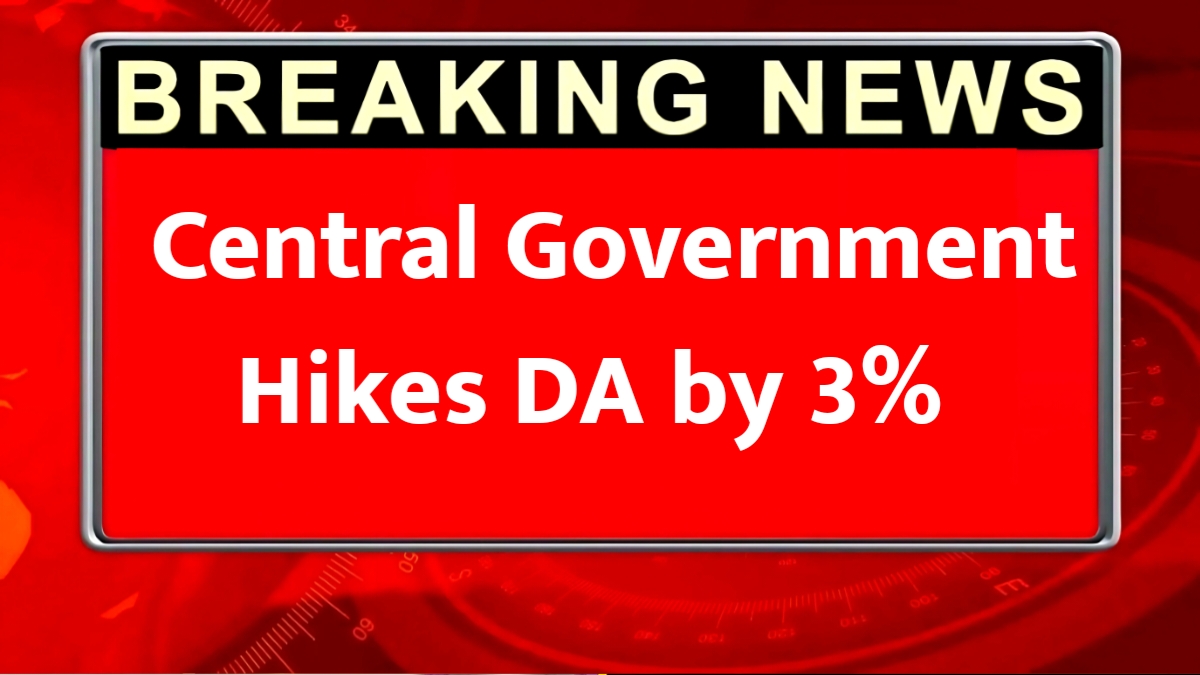
The Central Government has announced a fresh increase in Dearness Allowance (DA) that brings welcome financial relief to millions of households across India. The 3 percent DA hike, approved by the will come into effect from July 1, 2025. This decision directly benefits central government employees and pensioners who have been facing sustained pressure from rising prices of food, fuel, healthcare, and other essentials.
Dearness Allowance is a key component of government salaries and pensions, designed to protect incomes from inflation. With this latest revision, nearly 1.18 crore people will see an increase in their monthly earnings or pension payouts. The hike applies under the framework of the which links DA revisions to changes in inflation data. While the percentage may appear modest, its cumulative impact is significant for middle-class families and senior citizens who rely on fixed incomes.
Why the Dearness Allowance Hike Matters
Dearness Allowance plays a critical role in the salary structure of government employees. It ensures that purchasing power does not erode due to inflation. Since DA is calculated as a percentage of basic pay, even a small increase can result in a noticeable rise in take-home salary, especially for employees at higher pay levels. For pensioners, the corresponding Dearness Relief provides essential support to manage recurring expenses.

In recent years, costs related to healthcare, medicines, and utilities have increased steadily. Senior citizens, in particular, feel the impact more acutely because pensions are often their primary source of income. Regular DA revisions help maintain financial stability and offer predictability. Over time, these incremental hikes contribute to better income security for both serving employees and retirees.
Impact on Salaries, Pensions, and Household Budgets
With the 3 percent DA hike, employees will see a direct increase in their monthly salary from July 2025 onwards. The exact amount depends on basic pay levels, but for many families, the additional income can help offset rising grocery bills, school fees, and transport costs. Pensioners will also receive higher monthly payouts through enhanced Dearness Relief.
This adjustment is particularly important for middle-income households that rely heavily on fixed salaries or pensions. Unlike variable income groups, government employees have limited flexibility to absorb inflation shocks. The DA hike provides some breathing space and allows families to plan expenses with greater confidence in a challenging economic environment.

Fiscal Impact and Broader Economic Effects
Any increase in Dearness Allowance carries a substantial cost for the government due to the large beneficiary base. Officials estimate that the latest revision will add thousands of crores of rupees annually to the exchequer. However, policymakers often view this as a necessary expenditure to protect real incomes and maintain morale among government staff.
Higher disposable income among employees and pensioners can also stimulate consumption. Increased spending on goods and services supports demand in urban and semi-urban markets. Economists note that such calibrated income support helps sustain economic momentum, especially when private consumption is a key driver of growth.
Cabinet Clears Expansion of Kendriya Vidyalayas
Along with the DA hike, the Cabinet approved the establishment of 57 newacross various districts. The project involves an investment of over ₹5,800 crore and aims to improve access to quality education, particularly in underserved regions. These schools primarily serve the children of transferable central government employees.
The expansion is expected to benefit around 87,000 students and generate employment opportunities for teachers and support staff. Kendriya Vidyalayas are known for consistent academic standards and uniform curricula. Education experts believe that this move will strengthen public schooling infrastructure and reduce regional disparities in educational access.
Focus on Agriculture and Farmer Income Support
The Cabinet also introduced a mission focused on achieving self-reliance in pulse production. Despite being a major producer, India continues to import pulses to meet domestic demand. The new initiative emphasizes better seeds, improved procurement systems, and modern storage facilities to reduce dependence on imports.
Additionally, higher Minimum Support Prices for select Rabi crops have been approved to safeguard farmer incomes. Stable MSPs encourage crop diversification and reduce income volatility for farmers. Together, these measures aim to balance farmer welfare with food security and consumer affordability.

Infrastructure Push with Highway Expansion in Assam
Infrastructure development remains a priority, with the Cabinet approving the widening of an 85-kilometre stretch of into a four-lane road. Improved connectivity is expected to reduce travel time and enhance logistics efficiency in the region.
The Northeast has seen increased infrastructure investment in recent years. Better highways can boost tourism, facilitate agricultural transport, and attract private investment. Local businesses and trade bodies anticipate that improved road networks will open up new economic opportunities and strengthen regional integration.
What Central Government Employees Can Expect Next
The July 2025 DA revision follows the established pattern under the 7th Pay Commission. The next adjustment will depend on inflation data and fiscal assessments in early 2026. Employee unions are also closely watching discussions around the possibility of a future pay commission.

For now, the 3 percent DA hike ensures a timely increase in take-home pay and pensions. Combined with parallel initiatives in education, agriculture, and infrastructure, the recent Cabinet decisions reflect a broader policy approach that blends immediate income support with long-term development goals.
Disclaimer
This article is for informational purposes only and is based on official announcements and publicly available data related to the DA hike and Cabinet decisions. Readers are advised to refer to official government notifications, departmental circulars, or consult financial experts for precise calculations, eligibility details, and the latest updates before making financial decisions.