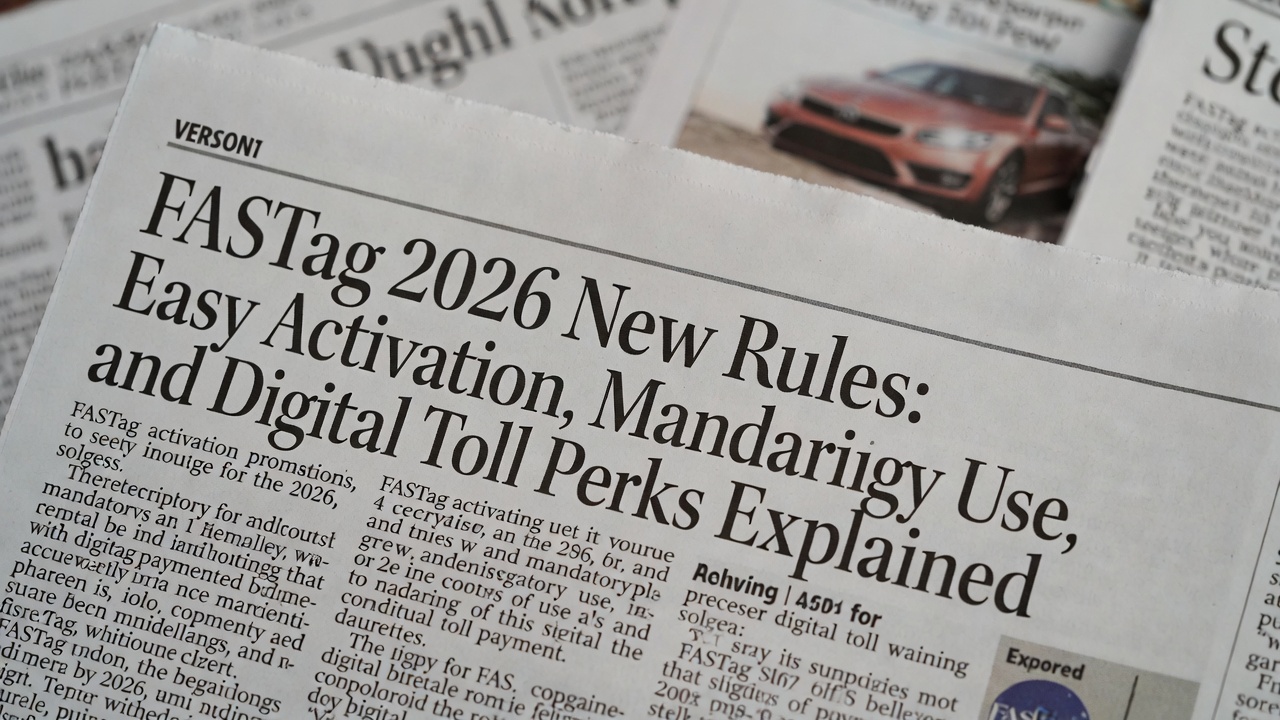
FASTag 2026 New Rules: Easy Activation, Mandatory Use, and Digital Toll Perks Explained

By gaurav

Published On:

FASTag 2026 New Rules have become a major point of discussion among daily commuters, commercial drivers, and transport businesses across India. Over the past few years, FASTag has quietly changed how people move on national highways by replacing cash queues with automatic digital payments. As India moves deeper into digital governance, the government has decided to strengthen this system further through updated guidelines in 2026. These changes are not just about toll collection; they focus on smoother travel, better compliance, and environmental benefits.

+500
📢 अभी Join करें WhatsApp Group फ़्री ग्रुप में ज्वाइन करें!!
Join Now →

The FASTag system, implemented under the guidance of the :contentReference[oaicite:0]{index=0}, is now considered a backbone of India’s highway infrastructure. With crores of vehicles already using FASTag, the new rules aim to remove remaining gaps such as inactive tags, misuse, and cash dependency. For ordinary drivers, this matters because it directly affects travel time, fuel costs, and penalties at toll plazas. Understanding these updates early can help vehicle owners avoid confusion, extra charges, and last-minute stress.

Mandatory FASTag Use on National Highways

Under the FASTag 2026 rules, mandatory usage remains the cornerstone of India’s toll policy. All private vehicles, commercial trucks, buses, and taxis using national highways must carry an active FASTag. Vehicles that enter toll plazas without a valid tag are charged double the applicable toll, a rule that has already proven effective in driving adoption. For frequent highway users, FASTag is no longer optional but a basic travel requirement.

यह भी पढ़े:
Train Ticket Booking Timings to Change : Know the New Timings and Rules

This strict approach benefits both commuters and authorities. For drivers, it reduces long queues and unpredictable delays, especially during peak travel hours. For the government, it ensures smoother revenue collection and better traffic management. Over time, mandatory FASTag use has helped reduce disputes at toll plazas and improved overall driving discipline. The 2026 guidelines simply tighten enforcement to ensure no vehicle bypasses the system.

Simplified FASTag Activation and Verification

One of the most user-friendly aspects of the FASTag 2026 update is simplified activation. Vehicle owners can now apply online using basic documents such as registration details and identity proof. Most major banks, digital wallets, and fuel stations offer quick issuance and instant activation options. This reduces dependency on physical visits and paperwork, making FASTag accessible even for first-time vehicle buyers.

Alongside easy activation, verification standards have been strengthened. Linking FASTag accounts with Aadhaar or PAN improves security and helps prevent fraud. It also ensures that each vehicle has a unique and traceable tag. While some users may initially find KYC updates inconvenient, the long-term benefit is fewer errors, faster dispute resolution, and a more reliable tolling system across highways.

यह भी पढ़े:
Fitment Factor Hike 2026: Big Salary Boost Expected Under 8th Pay Commission

Digital Tolling Benefits for Drivers and Environment

The FASTag system delivers practical benefits that go beyond convenience. Digital toll payments significantly reduce waiting time at plazas, allowing vehicles to pass through without stopping. This smooth flow cuts fuel consumption caused by idling engines, which directly lowers travel costs for drivers. For commercial operators managing large fleets, even small time savings translate into meaningful operational efficiency.

Environmental gains are another key advantage highlighted in the 2026 guidelines. Reduced congestion means lower carbon emissions and less air pollution around toll areas. With millions of vehicles using FASTag daily, the cumulative impact on fuel savings and emissions is substantial. By promoting cashless tolling, the government aligns highway travel with broader sustainability and climate goals.

Future Outlook of India’s Digital Highway System

Looking ahead, FASTag is expected to play an even bigger role in India’s transport ecosystem. Authorities plan to expand coverage to more highways, state roads, and expressways, ensuring seamless travel across regions. Integration with emerging technologies may enable features like distance-based tolling and real-time traffic analytics. These upgrades aim to make toll payments smarter and more accurate.
यह भी पढ़े:
Cabinet Approves 3% DA Increase – Good News for Central Employees &Pensioner

For users, the future promises fewer manual checks and a more predictable travel experience. As digital infrastructure improves, FASTag could also integrate with parking, fuel payments, and vehicle services. The 2026 rules are a step toward this vision, reinforcing India’s commitment to modern, tech-driven mobility that balances efficiency, transparency, and user convenience.

Disclaimer

This article is for informational purposes only. FASTag rules, penalties, and procedures may change based on official notifications or policy decisions. Readers are advised to verify the latest updates through official government or authorized FASTag issuer sources before making any decisions related to vehicle travel or compliance.

यह भी पढ़े:
Pension Scheme: In a major move to support vulnerable sections of society, the Indian government has announced a significant increase in pension benefits for widows, senior citizens, and differently-abled individuals. Rising inflation and the growing cost of living have made it difficult for many to meet their daily needs, especially those without a stable income. To address this issue, the new Widow, Senior Citizen & Disabled Pension Scheme 2025 aims to ensure financial security, dignity, and independence for millions of beneficiaries across the country. Under the latest update, eligible widows and citizens above 60 years of age will now receive ₹4,000 per month, while differently-abled persons will get between ₹6,000 and ₹10,000 monthly, depending on the severity of disability. This decision marks one of the biggest welfare boosts in recent years, offering real relief to people who rely on pensions for survival. The initiative also focuses on creating equality by standardizing pension amounts nationwide, ensuring no one is left behind regardless of where they live. Equal Pension Benefits Across All States One of the most important aspects of the new pension scheme is the elimination of state-level disparities. Until now, pensions differed across states, leaving many underprivileged individuals struggling with low monthly payments. This unified system ensures every citizen, regardless of region, receives fair and equal support. For instance, a widow living in a small village will now receive the same pension as one living in a metropolitan city. This change is being hailed as a step toward social equality and inclusive growth. It not only brings uniformity but also simplifies the administration of pensions. State governments will coordinate with central authorities to ensure smooth implementation. For beneficiaries, this means greater financial predictability and a sense of security in old age or during difficult times. Online Application Process Made Simple To make the process more accessible, the government has introduced a completely online application system. Applicants no longer need to visit government offices or stand in long queues. They can now apply for the pension directly from home through the official portal using a smartphone or computer. This user-friendly platform allows beneficiaries to upload required documents, track their application, and receive updates easily. For those who are not familiar with online systems or live in remote areas without internet access, local facilitation centers have been established. These centers provide assistance with document uploads and online submissions. The new digital model also minimizes paperwork, reduces delays, and ensures that applications are verified and approved faster than before. Direct Benefit Transfer for Transparency One of the key strengths of the revised pension scheme is the Direct Benefit Transfer (DBT) mechanism. Under this system, the pension amount is deposited directly into the beneficiary’s bank account each month. This reduces the chances of fraud, leakage, or delay, ensuring that every eligible individual receives their due amount promptly and securely. To access the benefit, applicants must ensure their bank accounts are linked with their Aadhaar numbers. The government’s integration of DBT not only enhances transparency but also builds trust among citizens. Especially for elderly or differently-abled people in rural areas, this method eliminates the need to travel or depend on intermediaries, making financial support accessible at their doorstep. Financial Relief Amid Rising Living Costs The increase in pension comes at a time when essential items like groceries, healthcare, and medicines are becoming more expensive. For widows and senior citizens who often rely solely on pensions, the revised amount of ₹4,000 to ₹10,000 per month can make a substantial difference. It provides them the ability to manage expenses independently without having to depend entirely on family or neighbors for daily needs. This reform also benefits families caring for elderly or differently-abled members. With a higher and more consistent pension amount, households will face less financial strain. The scheme not only supports individual beneficiaries but also contributes to reducing poverty and promoting social welfare across the nation. Documents Required for Pension Application The online application process requires certain essential documents to verify eligibility. These include an Aadhaar card, bank passbook, and residence proof. Additionally, specific certificates are needed depending on the category. Widows must submit the death certificate of their husband, senior citizens must provide age proof (such as a birth certificate or voter ID), and differently-abled applicants must upload a valid disability certificate issued by a government authority. Once all required documents are uploaded and verified by officials, the pension will start getting credited directly into the beneficiary’s bank account. The entire process has been designed to be fast, transparent, and convenient. Applicants are advised to ensure all details are correct and up to date to avoid any delays in receiving payments. Government’s Vision for Inclusive Welfare This updated pension scheme aligns with the government’s broader mission of inclusive development and social welfare. The long-term vision is to ensure that no citizen—especially the most vulnerable—is left behind. By making the system digital and nationwide, the government aims to promote transparency, equality, and economic security for all. Officials have also hinted that the pension amount could be revised periodically based on inflation and living costs. Such continuous improvement ensures that beneficiaries continue to live with dignity and financial stability. Overall, this reform reflects a strong commitment toward building a more equitable society where every individual can live with self-respect and confidence. Disclaimer: This article is intended for general informational purposes only. The details mentioned are based on available reports and official announcements as of now. Policies, amounts, and eligibility criteria may change in the future. Readers are advised to visit the official government website or contact local authorities for the latest and most accurate updates before applying for any pension benefit. Widow, Senior Citizen & Disabled Pension Scheme: Now Get ₹10,000 Every Month

Leave a Comment